
A lenticular photo booth makes photos that move. Two moments from one session are printed together behind a ridged plastic lens, so the picture changes as a guest tilts it: the pose, then the laugh; the guest, then your logo. Guests leave with a finished print in hand and a digital copy on their phone. Here is how the print works, the effects brands use, how it compares with a standard print and a GIF, and where it fits.
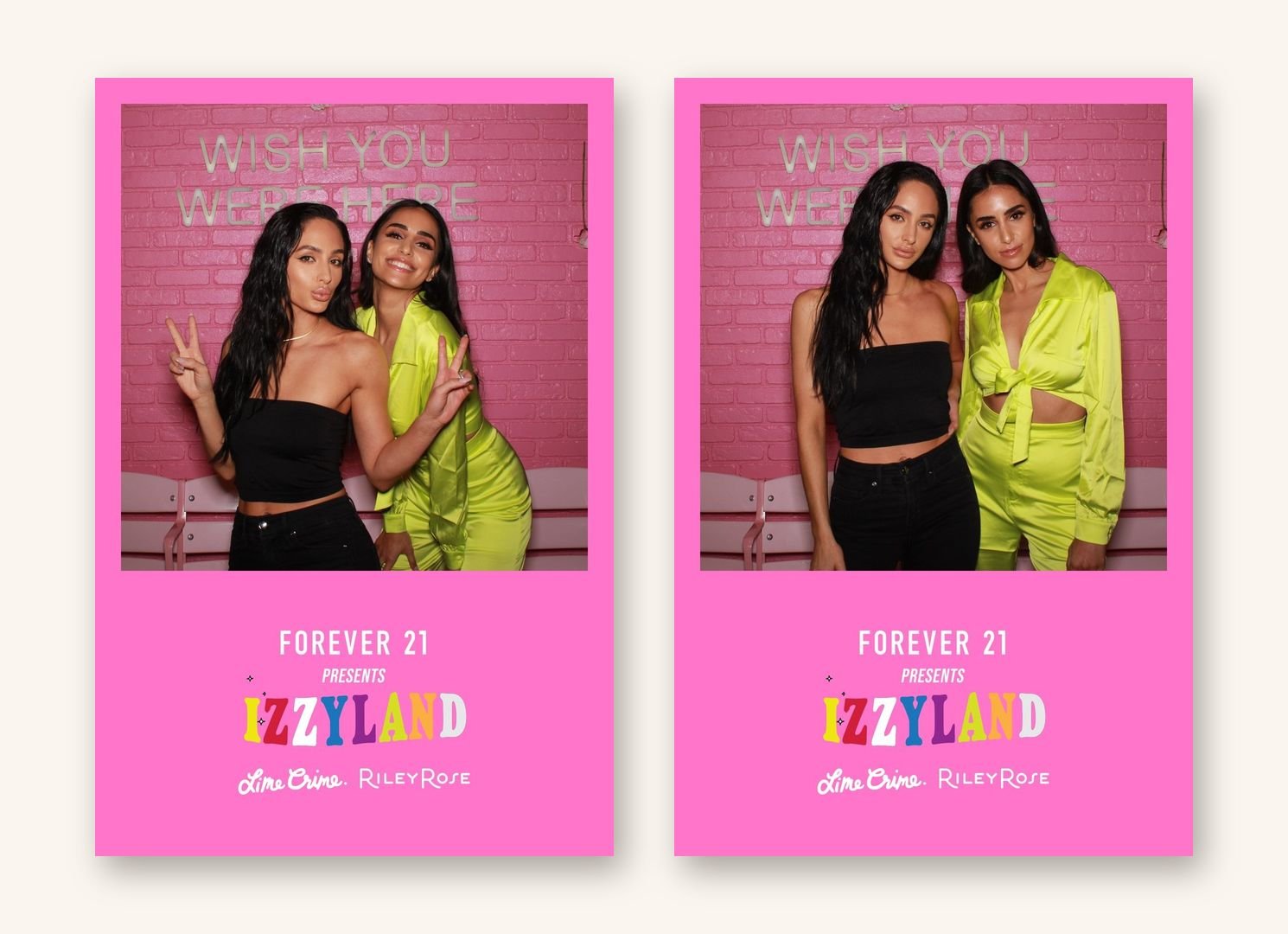
How a lenticular print works
The lens is the whole trick. A lenticular sheet is clear plastic with a row of fine parallel ridges on its face, and each ridge works as a tiny magnifying lens. Behind it, the two photos are sliced into thin vertical strips and interlaced, one strip from the first image beside one strip from the second, across the whole print.
From one angle, every ridge shows a strip of the first image, so you see the first photo. Tilt the print a little and every ridge shows a strip of the second, so the picture changes. Nothing moves except the viewer's hand, which is why people keep tilting it, and why it gets passed around a table.
The frame pairs in this post are shown flat and side by side, as an illustration of the flip. On the print, both frames share one lens and appear one at a time as it turns. They are sample designs built on templates from past Cheers To You events.
The effects: flip, motion, logo reveal and AI reveal
| Effect | What the guest sees | Best for |
|---|---|---|
| Flip | Two poses in one print: serious, then laughing; the toast, then the cheers | Parties, weddings, holiday events |
| Motion | A short sequence of frames that plays as the print turns in the hand | Dance moves, confetti throws, a hair flip |
| Logo reveal | The guest's photo on one angle, your logo, product or message on the other | Brand activations, launches, sponsor moments |
| AI reveal | The guest's real photo, then an AI version styled to the event | Launches and themed nights, paired with the AI photo booth |
The two-frame flip gives the cleanest, most striking change, which is why most event prints use two frames. The effect, artwork, print format and production plan are agreed for each event before the day.
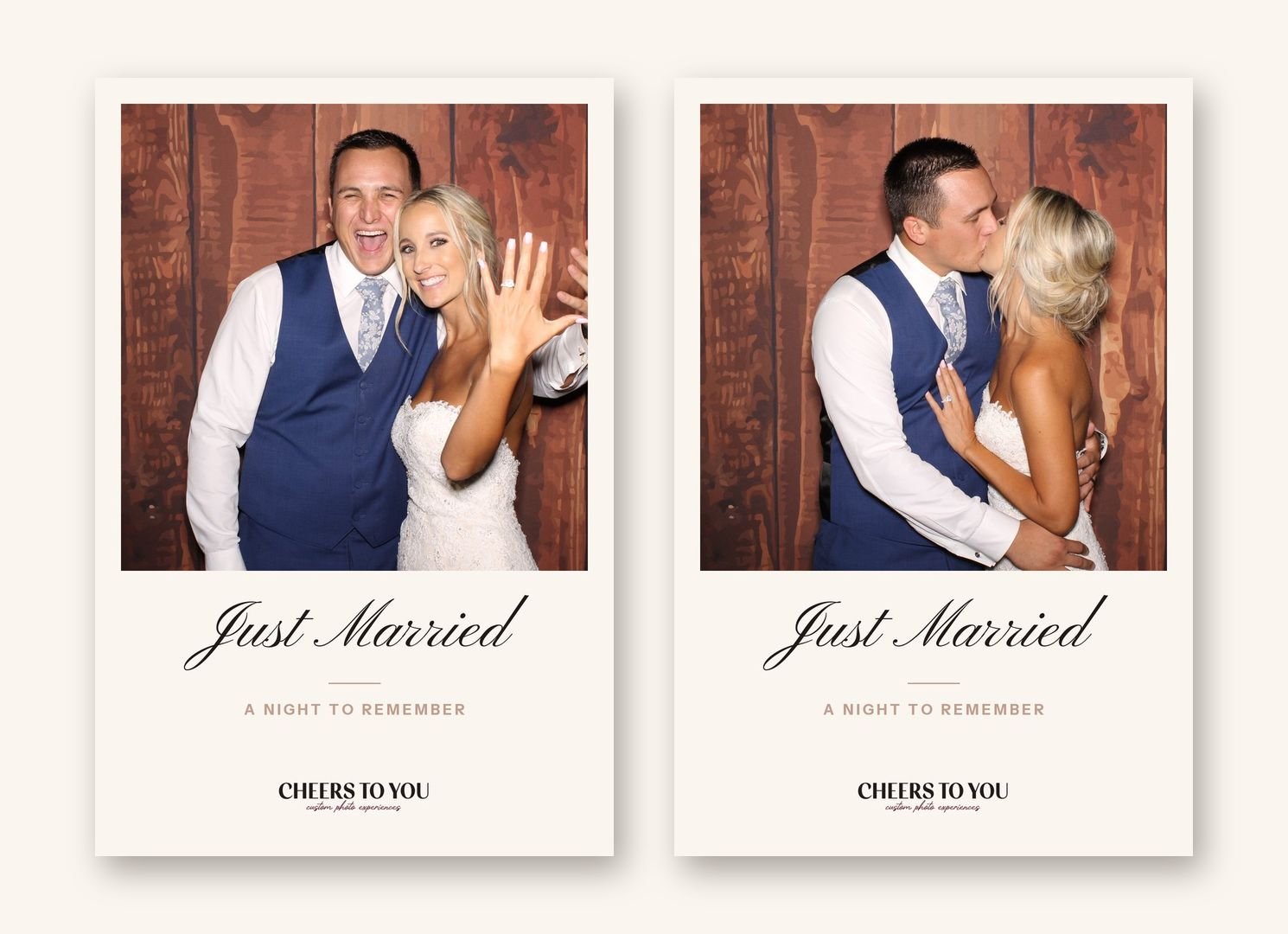
How the booth works at an event
- Pose for two frames. Guests take a short sequence in the booth, styled to the event with studio lighting.
- Combined into one design. The frames are layered into a single print designed around the event or brand.
- Finished at the print station. Each 4x6 print is made on site and set into its lenticular lens by the team.
- Collected and shared. Guests pick up their print at the table minutes later, with the digital copy already on their phone.
Because the print is finished at a separate station, the booth keeps capturing while earlier prints are completed, and guests come back to a pickup table to collect theirs. That walk back to the table is its own small moment: people compare prints, tilt them for friends and bring the next group over. Larger events add finishing stations so every guest leaves with a print.
Lenticular vs standard print vs GIF
| Lenticular print | Standard print | GIF or boomerang | |
|---|---|---|---|
| What guests hold | A 4x6 print set in a lens | A strip, 4x6 or polaroid-style print | A file on their phone |
| Movement | Changes as you tilt it, in the hand | One still moment | Plays on a screen |
| Where it lives after | A desk, a fridge, a bag, passed around | A fridge, a guest book, a frame | Stories, reels and the group chat |
| Brand moment | The logo appears as the print turns | The logo sits in the frame design | The logo rides in the overlay |
| Best for | Launches, premieres, galas, a favor that moves | Every event; the classic keepsake | Reach on social media |
The formats work together. A lenticular print carries the physical moment home, and the digital copy that comes with it does the posting. Our guide to polaroid-style prints covers the standard print formats in detail.
Where brands use it
- Brand activations: a logo reveal on every print, and a crowd at the pickup table watching prints come together. See brand activation photo booths and our list of photo booth activation ideas.
- Launches and premieres: the print guests keep showing around after the red carpet, with the product or the title art on the second angle. See corporate photo booths.
- Galas and holiday parties: the toast and the cheers in one print, from the company party.
- Weddings: a favor that moves, with the couple's monogram on one angle and the guests on the other. See wedding photo booths.
For an activation, the appeal is simple: a printed keepsake that is still doing its job days later, every time someone picks it up and tilts it. Pair it with a fully wrapped booth and a custom backdrop and the whole setup reads as part of the campaign.
Planning a lenticular activation
Bring these to the first conversation and the plan comes together quickly:
- The effect. Flip, motion, logo reveal or AI reveal, and what should appear on each angle.
- Artwork and guidelines. Logo files, colors, fonts and any campaign line, so the print layout, screens and backdrop are designed as one system with a mockup to approve first.
- Attendance and hours. Print quantities and finishing stations are planned around how many guests attend and how long the booth runs.
- The booth it pairs with. Open-air for groups, the glam booth for black-and-white beauty portraits, or the AI booth for the AI reveal.
- Sharing and data. Digital delivery by text or email, with opt-in capture when the activation calls for it.
Looking for another physical takeaway? Compare photo keychains and custom trading cards, two other keepsakes made on site.
Lenticular photo booth questions
What is a lenticular photo booth?
A photo booth that makes photos in motion: two images from one session printed together behind a ridged lens, so the picture changes as guests tilt it. Guests take home a finished 4x6 print set in its lens, with a digital copy on their phone.
Is a lenticular print the same as a GIF or a 3D photo?
A lenticular print is a physical flip photo: the change happens in the lens as you tilt it, right in your hand. A GIF plays on a screen, and true 3D depth is a separate effect. The intended result is agreed before the event.
How many photos go into each print?
Two. A two-frame flip gives the cleanest, most striking change as the print tilts, and it keeps the line moving at busy events.
Can the print include our logo or product?
Yes. Every print is designed to your brand guidelines, and a logo reveal puts the guest's photo on one angle and your logo, product or campaign line on the other. See brand activation photo booths.
Do guests also get digital copies?
Yes. Each guest receives the digital photos by text or email, so the moment is shared online while the moving print goes home with them.
How is a lenticular photo booth priced?
The quote reflects the effect, print quantities, event hours, branding, staffing and venue logistics. Send your date, venue, attendance and creative direction through the lenticular photo booth page.
Planning photos in motion?
Send the date, the venue, the attendance and the effect you have in mind, and we'll design the print around it.
Get Pricing