
Convention crowds already collect. A trading card photo booth gives them a card of themselves: their portrait in the title's art direction, their handle on the front, the sponsor on the back, printed and cased at the booth. It's the activation that pulls a line on the show floor and sends people back to the hall posting it. Here's how it runs at conventions, esports tournaments, game launches and fan events, and what to plan for.
Why trading cards work at conventions and fan events
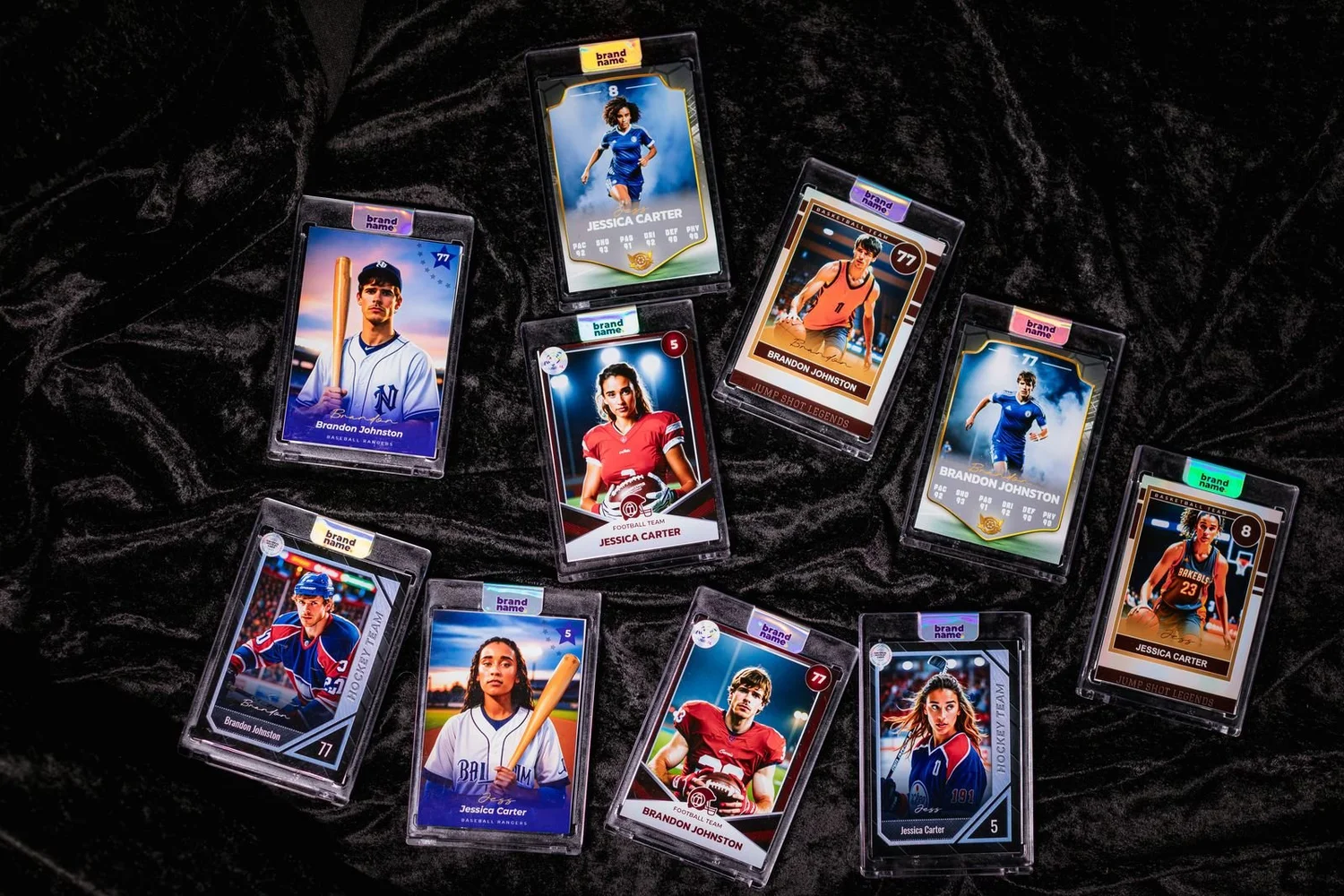
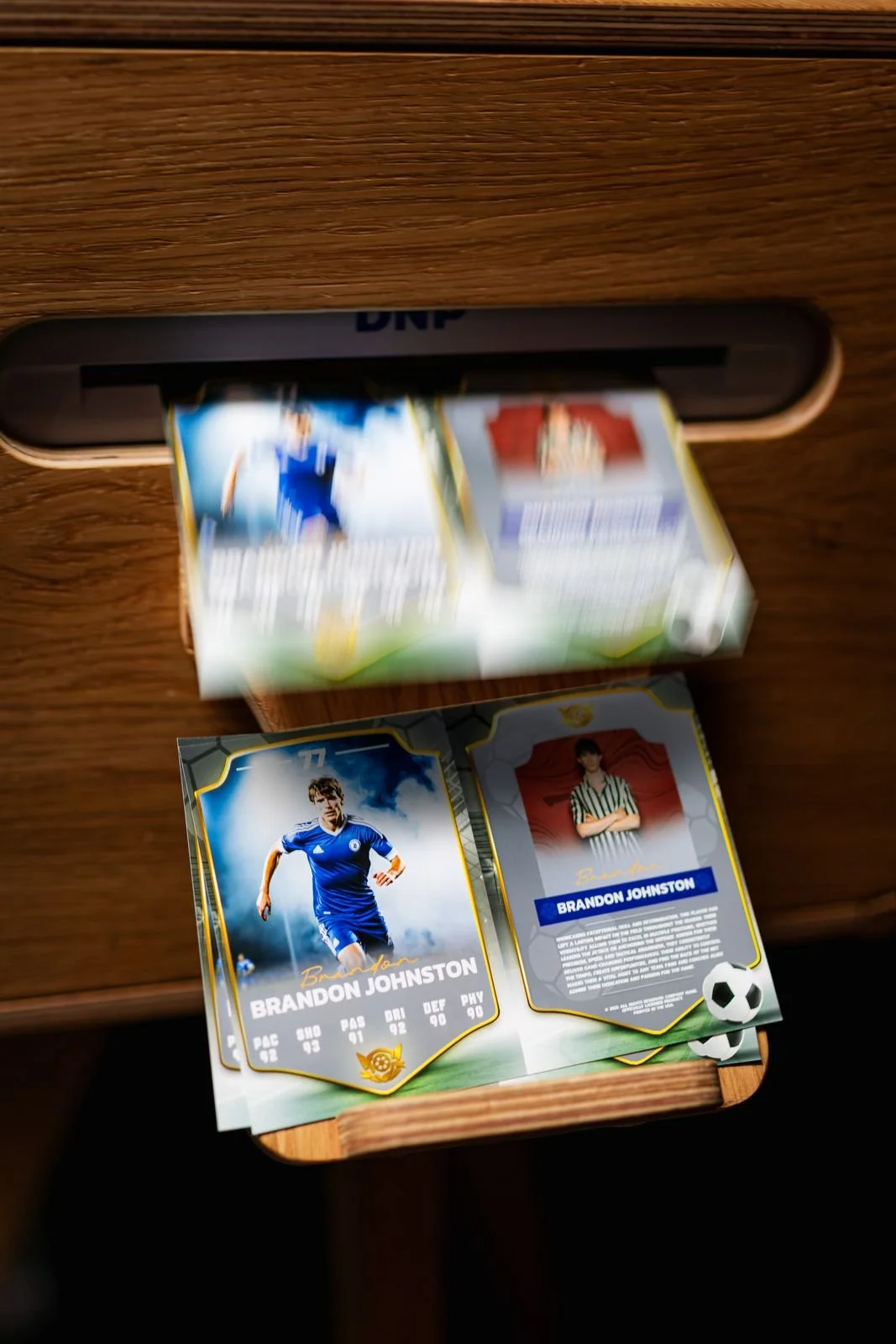
The keepsake matches the crowd. A convention attendee knows the size, the sleeve and the case, and they know a one-of-one card when they see one. The booth prints the front and back on site at the classic 2.5 by 3.5 inches, finished to collector-card thickness, and hands it over in a clear toploader or a magnetic case with a holographic seal. The digital card goes to the phone by text, with the brand in frame, so the share carries the booth number and the title around the hall.
It also gives the brand a line. Cards coming off the printer and into cases is a show people stop for, and a line on a show floor is the metric exhibitors care about most.
The card: handles, characters and the sponsor
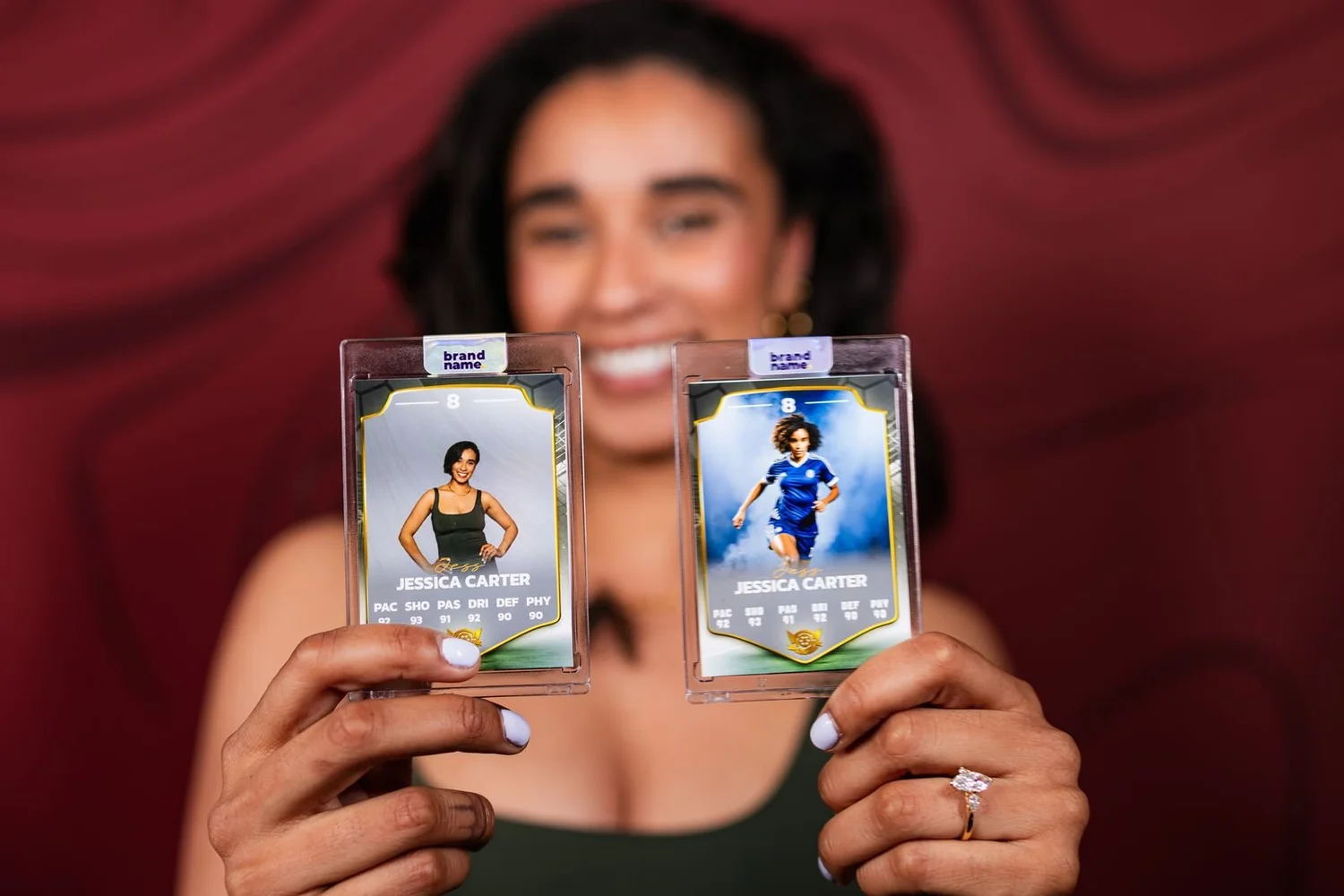
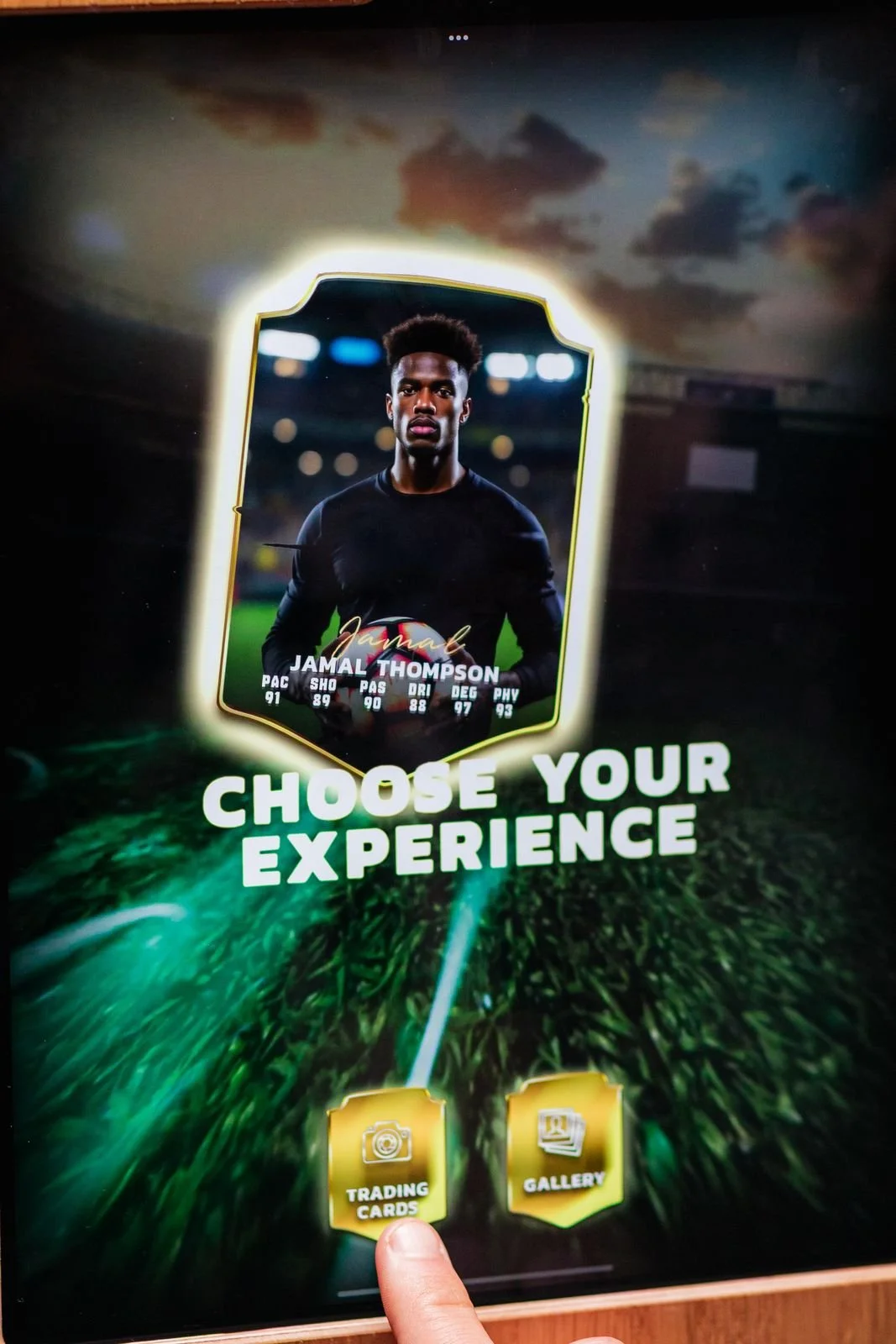
Two experiences run on the booth. Fan Card is one design with up to five titles guests tap: five classes, five factions, five teams in a tournament bracket. Signature Card takes the guest's handle, a number and stats at the screen with a live preview, prints a personal back, and seals the card in a magnetic case with the holographic seal in the sponsor's logo. Opt-in fields can be added for the brand's program.
The design is built to the title or the show: the art direction, the logo, the booth number, the sponsor's mark. With the publisher's approval, the card can use the game's characters and settings as reference art, and we send samples for sign-off before the event. Our guide to Fan Card vs Signature Card covers the choice.
AI character looks on the card
On Signature Card, the front can be the guest's studio portrait or an AI render built from it. For a gaming event that means the attendee rendered into the title's world, in a look written from the reference art you provide and approved before the show. For a fan event it can be a star-player render in the team's colors. Our guides to AI trading cards and the AI photo booth show what the render looks like.
Running it on the show floor
- Footprint. The station fits a 10x10 booth with room for the line, or a larger activation with a second station. Share the floor plan and the booth number.
- Power, access and insurance. We plan around the venue's requirements, certificate of insurance, and load-in schedule, and we coordinate the footprint with the show's production team before confirming the setup.
- Volume and hours. Share expected attendance and the activation hours. Cards are quoted as a quantity (custom cards for up to a number of attendees), and capacity is scoped by personalization, staffing and stations. Multi-day shows are quoted by the program.
- Branding every surface. The booth exterior, the screens and the cards are designed to the title or the show, with mockups approved before the day. See photo booth activation ideas for the formats brands pair with the cards.
- Reporting. After the event, the client receives a dashboard with sessions, shares and impressions, plus the full gallery.
Events it fits
- Conventions and expos: a card for every attendee who stops at the booth, with the booth number and the sponsor on the back. See trade show photo booths.
- Esports tournaments: player cards for the teams, fan cards for the crowd between matches. See gaming photo booths.
- Game launches and studio events: players step into the new title on day one, and the share does the marketing.
- Fan nights and community events: the format a credit union used for its member night with the LA Rams, where every member left with a cased Signature Card. See the case study.
- Brand activations: the card carries the campaign; see trading card activations for brands and agencies and the brand activation photo booth page.
Our guide to what a trading card photo booth is covers the booth from step-up to finished card.
Convention and gaming trading card questions
Can a trading card booth work on a convention floor?
Yes. The station fits a standard booth with room for the line, runs on venue power, and is coordinated with the show's production team for access, insurance and load-in.
Can the card use our game's characters and art?
Yes, with the publisher's approval. We build the card and any AI look from the reference art you provide and send samples for sign-off before the event.
Can attendees put their gamertag on the card?
Yes. On Signature Card, the attendee enters their handle, a number and stats at the screen with a live preview, and the card prints with a personal back.
How many cards can you make during a show?
Programs are scoped by card volume, personalization, staffing and stations. Share expected attendance and activation hours and we plan capacity, with a second station for larger programs.
Can we collect opt-ins at the booth?
Yes. Signature Card supports opt-in fields for brand programs, with consent wording agreed before the show and a post-event dashboard of sessions, shares and impressions.
Exhibiting or launching?
Send the show, the dates and the expected attendance, and we'll scope the cards, the stations and pricing.
Get Pricing