
Agencies, destination management companies and event producers often need a photo moment inside a bigger program, delivered under their own name or their client's. That is what white-label photo booth services are for: a partner that designs, staffs and reports on the booth while the agency keeps the client relationship. Here is how it works, what to expect at each step and the questions to ask before the first program.
- What white-label means for a photo booth
- White-label, co-branded or vendor-branded
- How a program runs, from brief to recap
- Data, consent and the recap
- A real one: Sexy Hair at Hairbrained Fest
- Formats that work well in white-label programs
- Questions to ask a white-label partner
- White-label photo booth questions
What white-label means for a photo booth
In a white-label program, every guest-facing part of the experience carries your client's brand: the booth wrap, the touchscreen, the print, the share message and the gallery. The attendant works to your run-of-show and represents the program, and the booth company stays in the background. Your agency presents the activation as part of its own production.
For the agency, the value is control. You choose the creative direction, set the approval steps and decide what the client sees, while a specialist handles design production, equipment, staffing and reporting for the photo moment.
White-label, co-branded or vendor-branded
| White-label | Co-branded | Vendor-branded | |
|---|---|---|---|
| Guest-facing brand | Your client only | Client plus a partner mark | Client plus the booth company |
| Client relationship | Agency holds it | Agency holds it | Shared or direct |
| Best for | Agency-produced activations and tours | Brand collaborations and sponsor programs | Direct bookings by brand teams |
| Recap goes to | The agency, for the client deck | The agency or both partners | The brand team |
All three run on the same booth, the same design process and the same reporting. The choice is about who presents the work to the client.
How a program runs, from brief to recap
1. The brief
Goals, audience, venue, dates, brand guidelines and approval deadlines. Add the white-label requirements and the recap the client expects, and the proposal comes back ready to forward.
2. Design and approvals
Wrap art, overlays, touchscreens and print templates are built to the guidelines and routed through your sign-off before load-in. Layered approvals are normal: we work to the agency's review first, then the client's.
3. Event day
Early load-in, the booth run to your show flow and an attendant on the floor from first guest to last, so your team can stay with the client. One contact handles the program from the proposal to the final file.
4. The recap
The dashboard link, the branded gallery and the opt-in export, delivered for the client report. Paperwork follows the same standard: a W-9, a certificate of insurance naming your client or the venue, and program or PO numbers on every document.
Data, consent and the recap
A photo booth is one of the few activation elements that produces a measurable result the same week. In a white-label program, the data setup is agreed with your team before launch:
- Opt-in and survey fields written to the client's goals, with sharing and marketing consent kept as separate choices.
- Reporting agreed to the brief: sessions, shares by channel, reach and impressions in the analytics dashboard.
- Deliverables confirmed in advance: the gallery, the contact export and the dashboard link, all handed to the agency.
Our activation planning checklist covers the data questions to settle with your client.
A real one: Sexy Hair at Hairbrained Fest
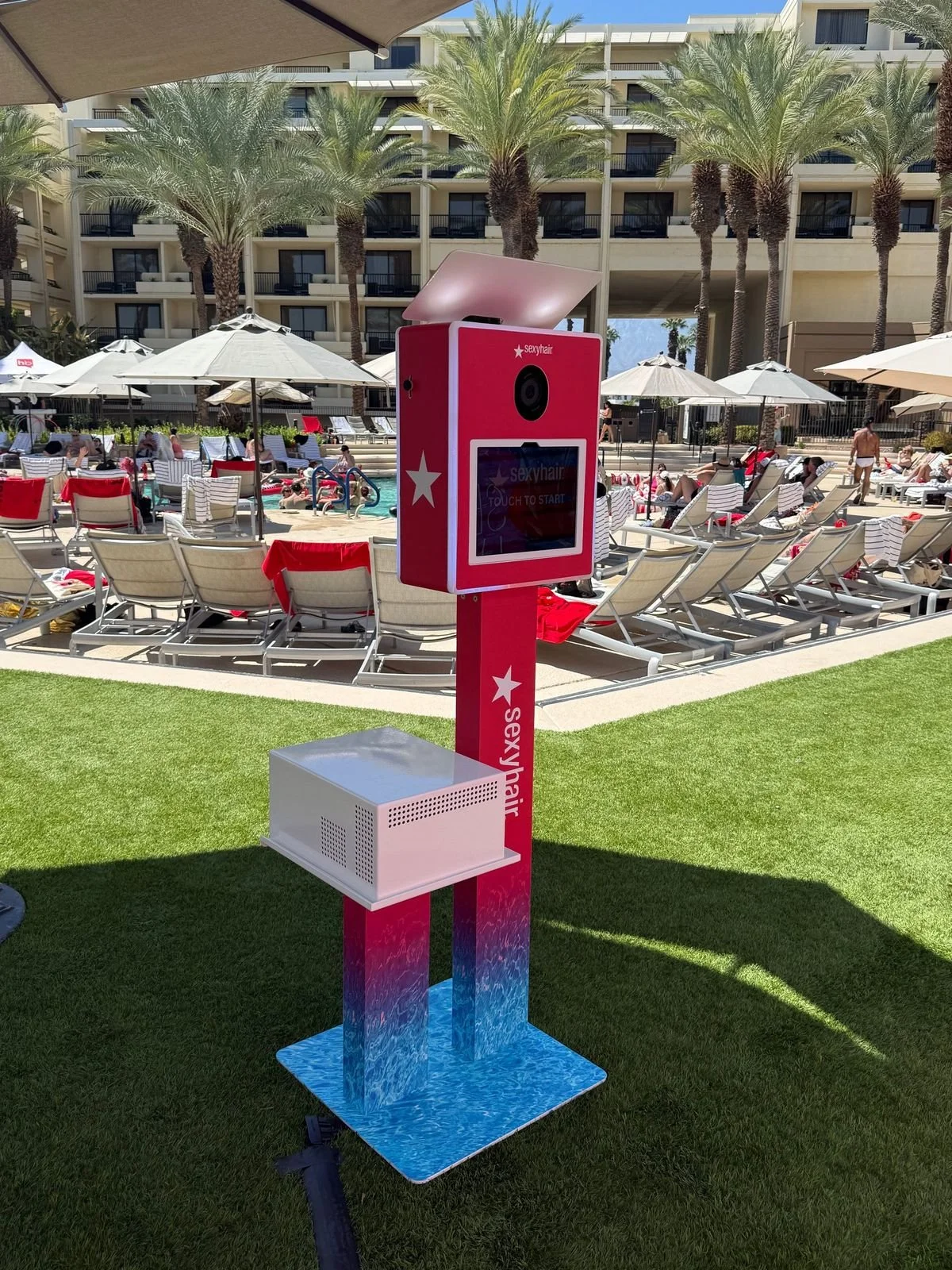
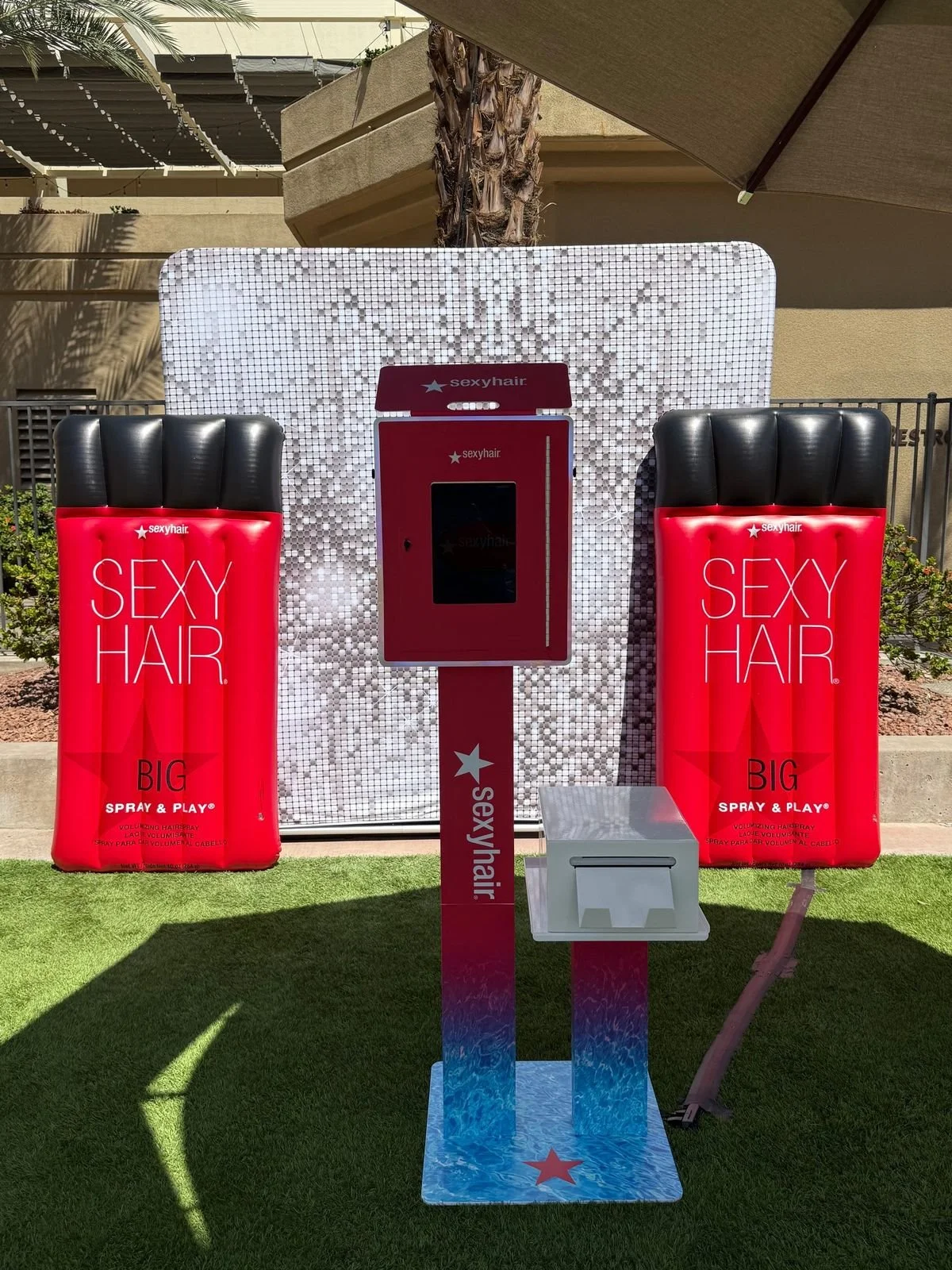
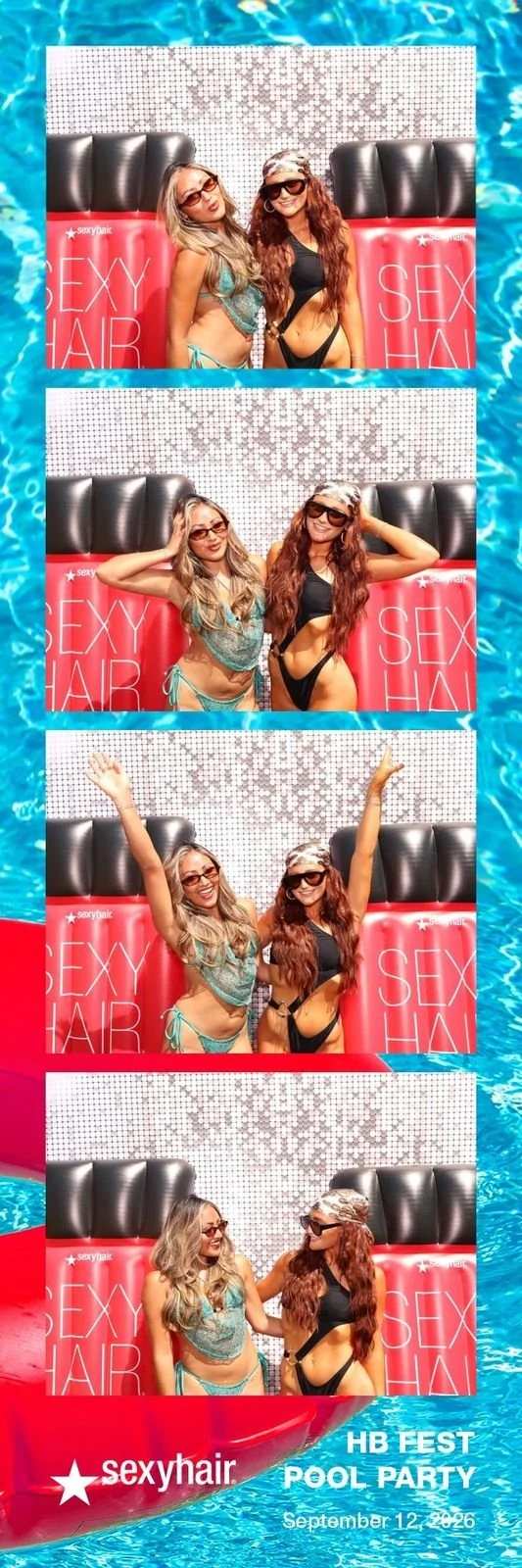
For a hair care brand's pool party at the JW Marriott Desert Springs, produced with a San Diego DMC, we ran a fully wrapped open-air booth beside the pool. Every session printed, 97% of guest sessions texted the branded photo home, and each send captured an opt-in contact. The client's post-event dashboard showed 40.5K impressions and 103 opt-in contacts. The full story is in the Sexy Hair case study.
Formats that work well in white-label programs
- Open-air booth: groups in one frame, a branded backdrop and the fastest line on the floor. The flexible default for launches, conferences and festival dates.
- Vintage enclosed booth: a private, curtained booth that reads as a branded installation when the exterior carries the campaign.
- Glam booth: soft, flattering light and a retouched finish, a natural fit for beauty, press and VIP rooms.
- Custom trading cards: a collectible card for every guest, designed to the brand and printed on site, for sponsor programs and member nights.
- AI photo booth: guests placed inside the campaign's world, styled to the brand.
Choose the guest outcome first, then the format. A multi-format floor can pair two of these inside one proposal, with one design system across both.
Questions to ask a white-label partner
- Can every guest-facing touchpoint carry the client's brand, including the share message and the gallery?
- How do design approvals run, and how many rounds fit the timeline?
- Who is the single contact from proposal to recap?
- Which metrics will the recap include, and who receives the contact export?
- Can you provide a W-9, a certificate of insurance and PO numbers on invoices?
- Can you run multiple booths or multiple days inside one proposal?
Multi-format floors work well for agencies: an open-air booth for groups, a trading card booth for a collectible, or a vintage enclosed booth as the centerpiece; see the glam and AI booths for the other two. Our guide to trading card activations for brands and agencies shows one format in depth, and trade show photo booth ideas covers the show floor.
White-label photo booth questions
What is a white-label photo booth?
A photo booth run under your agency's or your client's brand. The booth, the screens, the prints and the share flow carry the client's identity, the attendant follows your run-of-show, and the booth company's name appears only where you choose to place it.
Can our agency's name appear instead of yours?
Yes. Proposals, on-site staff and the guest experience can all carry your agency or your client. We work to your run-of-show and keep the client relationship with you.
Who owns the guest data from a white-label activation?
You or your client. Opt-in wording and survey fields are agreed with your team before launch, and the contact export, the gallery and the dashboard link are delivered to you after the event.
What do you need from our team to start?
The event goal, dates, venue, guest count, brand guidelines and your approval deadlines, plus any white-label requirements and what the client expects in the recap. A rough deck is plenty to scope a proposal.
Can you staff programs outside Southern California?
Yes. We produce across Los Angeles, Orange County, San Diego and the Inland Empire, and programs farther out are quoted with travel and logistics built into one proposal.
How is a white-label program priced?
Pricing follows the scope: format, days, design and wrap, data capture and location. Send the brief through our agency partners page and we'll return a scoped proposal.
Pitching a program with a photo moment?
Send the brief, even an early one. We'll come back with the format, the scope and a proposal you can forward to your client.
Get Pricing